Why are my shingles curling and cracking
Curling and cracking shingles in Houston usually mean heat damage, poor attic ventilation, or storm wear. Here is how to tell what is happening on your roof — and what a roofer checks.
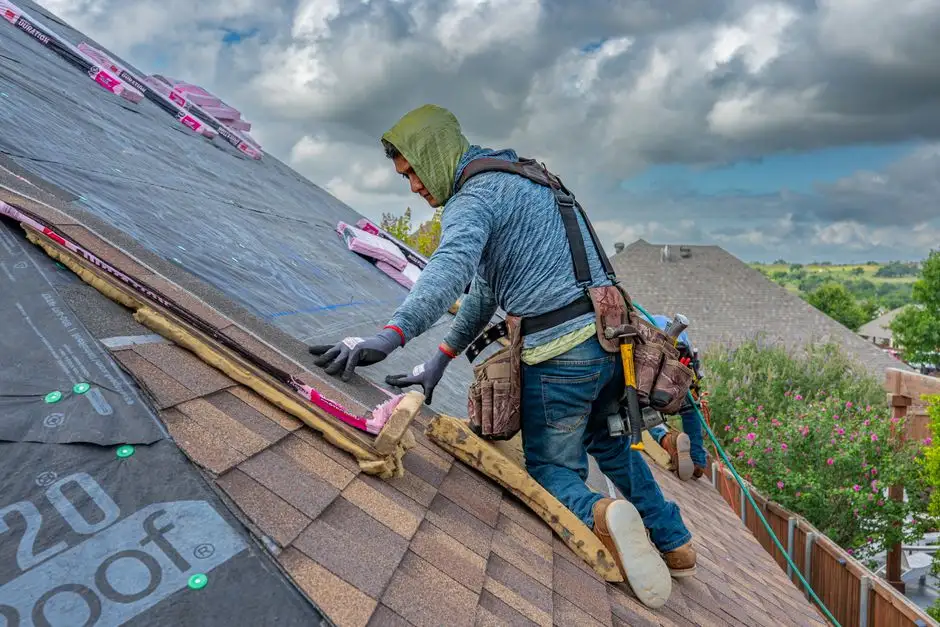
Why are my shingles curling and cracking in Houston?
Shingles curl and crack in Houston because the roof deck stays hot and wet for too long, and because the shingles themselves age faster here than in most of the country. Architectural shingles last roughly 18–25 years in Houston, against about 30 years nationally, because heat, UV and humidity accelerate binder oxidation and granule loss.
Curling is the shingle losing its shape as the asphalt binder dries out and the mat shrinks. Cracking is the same process going further — the shingle splits, usually along the line where it bends over the course below. Both let water under the covering, and both get worse with every summer.
The Houston-specific causes behind curling shingles
- Heat. Rooftop temperatures in summer routinely exceed 160°F on flat sections, and attics run 140–160°F without adequate ventilation. Heat is the main shortener of shingle life in Houston.
- Poor attic ventilation. Attics built with gable or box vents only, well short of balanced ridge-to-soffit ventilation, cook the shingles from below and rot the decking from inside — without visible interior staining. Pre-1980 bungalows in Montrose and the Heights are the classic case.
- Humidity and shade. Shaded slopes stay damp and grow algae and moss. Dampness holds heat against the shingle and accelerates the binder breakdown.
- Storm wear. The May 2024 derecho and Hurricane Beryl in July 2024 lifted shingles at the edges; hail in spring bruises them. A lifted shingle curls faster than one lying flat.
- Age. A shingle roof at 18–25 years in Houston is at the end of its realistic life. Curling across the whole roof at that age is wear, not a defect.
What causes shingles to curl in Houston TX?
The short answer is heat and time, usually made worse by ventilation. When the attic cannot breathe, the deck stays hot long after sunset, and the shingles bake from both sides. The binder oxidises, the granules loosen and wash into the gutters, and the shingle edges lift and curl. Once an edge lifts, wind gets under it — and Houston has no shortage of wind.
The pattern tells the story. Curling across the whole roof, worst on the south- and west-facing slopes, is age and heat. Curling in one patch, near a valley or a chimney, is more likely a flashing or ventilation problem in that spot. A roofer checks the attic as well as the roof, because the cause is often underneath.
How to tell curling from normal wear
Normal wear is granule loss and a slight colour change. Curling is a shape change: the edges lift (cupping) or the centre rises (clawing). Cracking is a split in the shingle, usually visible from the ground with binoculars. If you can see the shingle edges lifting, if granules are piling up at the downspouts, or if the roof is past 18 years old and curling across more than one slope, it is not normal wear — it is a roof near the end of its life.
Check from the ground with binoculars. Do not climb on the roof: curled shingles are brittle and the deck underneath may be soft.
Can curling shingles be repaired in Houston Texas?
A few curled shingles can be replaced, and a roofer will tell you honestly when that is enough. But curling across a whole slope is a sign the binder has gone across the whole slope — replacing a handful of shingles does not fix the rest, and the next summer will curl the next row. At that point the honest answer is a written scope for replacement, with the decking and ventilation fixed at the same time.
What a roofer checks before answering: the age of the roof, how widespread the curling is, the condition of the decking underneath, the ventilation, and the flashing. A repair quote that never mentions the deck or the ventilation is incomplete.
What to watch out for
- Sealing curled shingles down. Sealant does not restore a shingle whose binder has gone. It buys weeks, not years.
- Replacing shingles without checking the attic. If poor ventilation caused the curling, new shingles will curl the same way.
- Ignoring granule loss. Granules at the downspouts mean the protective layer is washing away. A roof losing granules is losing its UV protection.
- Waiting for a leak. Curling lets water under the covering long before it shows on the ceiling. By the time the ceiling stains, the deck may already be soft.
When to call a professional
Call for an inspection if shingles are curling or cracking across more than one slope, if granules are collecting at the downspouts, or if the roof is past 18 years old. We inspect the roof and the attic, photograph what we find, and give you a straight answer on repair versus replacement. Call Thomas Family Roofing at (936) 873-7200 or see our roof repair and roof replacement pages.
Frequently Asked Questions
Why are my shingles curling and cracking in Houston?
Heat trapped in the attic, poor ventilation, and storm wear. Houston shingles last roughly 18–25 years because heat, UV and humidity age the asphalt binder faster here than nationally.
Can curling shingles be repaired?
A few can be replaced. Curling across a whole slope means the binder has gone across the whole slope, and the honest answer is usually a written scope for replacement, with ventilation fixed at the same time.
How long do shingles last in Houston?
Roughly 18–25 years for architectural shingles, against about 30 years nationally. Shaded slopes grow algae and moss, and poor ventilation shortens life further.
Do curling shingles mean I need a new roof?
Not always — a few curled shingles can be replaced. Widespread curling, cracking and granule loss across several slopes usually mean the roof is near the end of its life. An inspection decides it.
Get help with Roofing in Houston
Call Thomas Family Roofing at (936) 873-7200 and tell us what your roof is doing — we will give you a straight answer and a written scope. Or send a message through the contact page.