Clear scope before work
You see the written scope and the price before any work starts.

The gutter gets the attention, but the downspout does the work: it is the part that carries a Houston downpour from the roof to the ground, and the part that decides whether that water soaks the slab or leaves the property. Undersized leaders, downspouts that stop at the foundation, and outlets clogged with pine needles are the three failures we see most — and all three are fixed by sizing the leader to the roof area and routing the discharge away from the house.
You see the written scope and the price before any work starts.
Gutters, fascia and downspouts are treated as part of the roof water system, not an add-on.
We photograph the fascia, hangers and outlets so you can see the problem yourself.
A Houston roofing company at 5507 Lyons Ave — call (936) 873-7200 and talk to the team.
A downspout is sized to the roof area feeding it, not to whatever was there before. Here is what an installation includes.
Leaders are sized to the roof area and the rainfall they must carry. A long run with one small downspout will overflow in a Houston burst — we add capacity where the roof needs it.
Downspouts are fastened to the wall on close centers so they stay plumb and do not pull away under a full load of water.
Elbows and joints are sealed and screwed, not just slipped together. A joint that separates dumps water straight down the wall.
Extensions and splash blocks carry water 6 to 10 feet from the slab. On tight lots we route to a pop-up emitter so runoff never sits against the house.
We run water through every leader and watch the discharge. Scrap and old leaders are hauled off.
Tell us where your water goes now — and where it ends up when it rains hard — and we will arrange an inspection and a written scope before any work starts.
Downspout installation in Houston is sizing leaders to the roof area, placing them where the water can actually leave the property, and fitting extensions so the discharge lands well away from the slab.
Most Houston homes have too few downspouts for the roof area, or downspouts that stop a foot from the foundation. In a normal rain that is a minor flaw. In a Harvey-intensity burst it is the difference between a dry slab and a wet one — and Houston’s clay soil swells and shrinks with moisture, so water at the slab moves foundations.
The other common failure is clogging. Pine needles in Kingwood and oak leaves in the Heights pack the outlets, and a downspout that looks fine from the ground is often blocked at the elbow. We size the leaders, fit guards where the canopy calls for them, and prove the flow with water.
We walk the roofline, measure the runs, and work out which roof area feeds each leader. Undersized leaders and missing downspouts are flagged in writing.
Leaders are sized to the roof area and the discharge route is agreed — extensions, splash blocks, or a pop-up emitter on tight lots. You get it in writing.
Old leaders are removed and the outlets are cleared. The fascia and gutter are checked where the new leaders will hang.
Leaders are hung plumb, fastened to the wall, and sealed at every elbow and joint. Extensions are fitted and aimed away from the slab.
We run water through every leader and watch the discharge. Scrap is hauled off and the beds below the outlets are left clean.
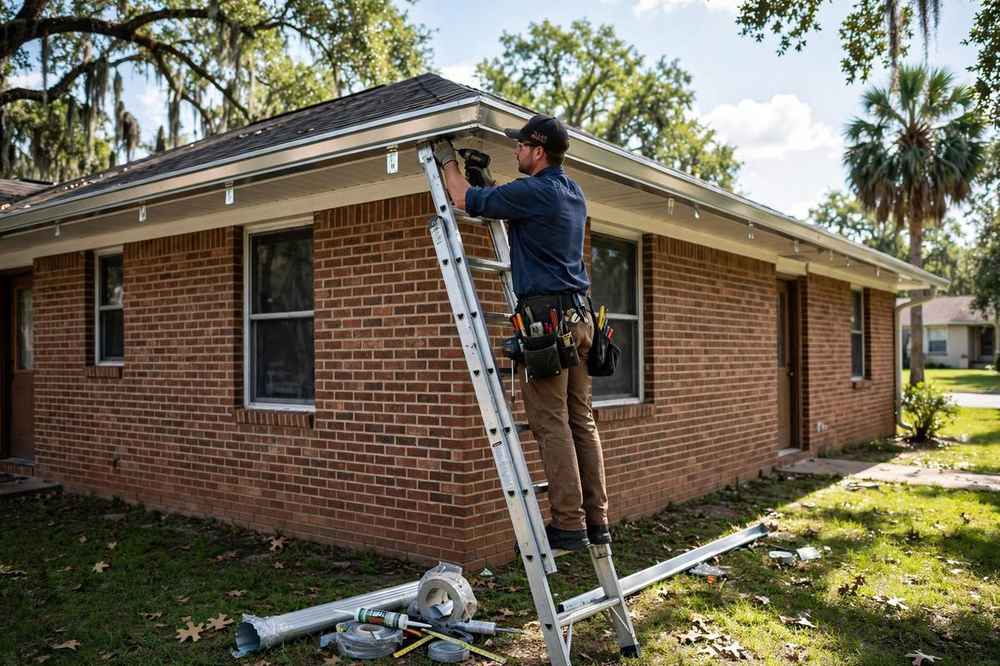
Leaders are sized from the roof area feeding them, not guessed. A long run with one small leader will overflow in a Houston burst.
Leaders are hung plumb and checked with a level. A leader out of plumb pulls away from the wall under a full load.
Elbows and joints are crimped, sealed and screwed. A joint that separates dumps water straight down the wall.
Leaders fastened to the wall on close centers so they stay put in a storm and do not rattle loose.
Discharge is routed 6 to 10 feet from the slab, or to a pop-up emitter on tight lots.
Running water through every leader is the only honest test. We watch the discharge, not just the connection.
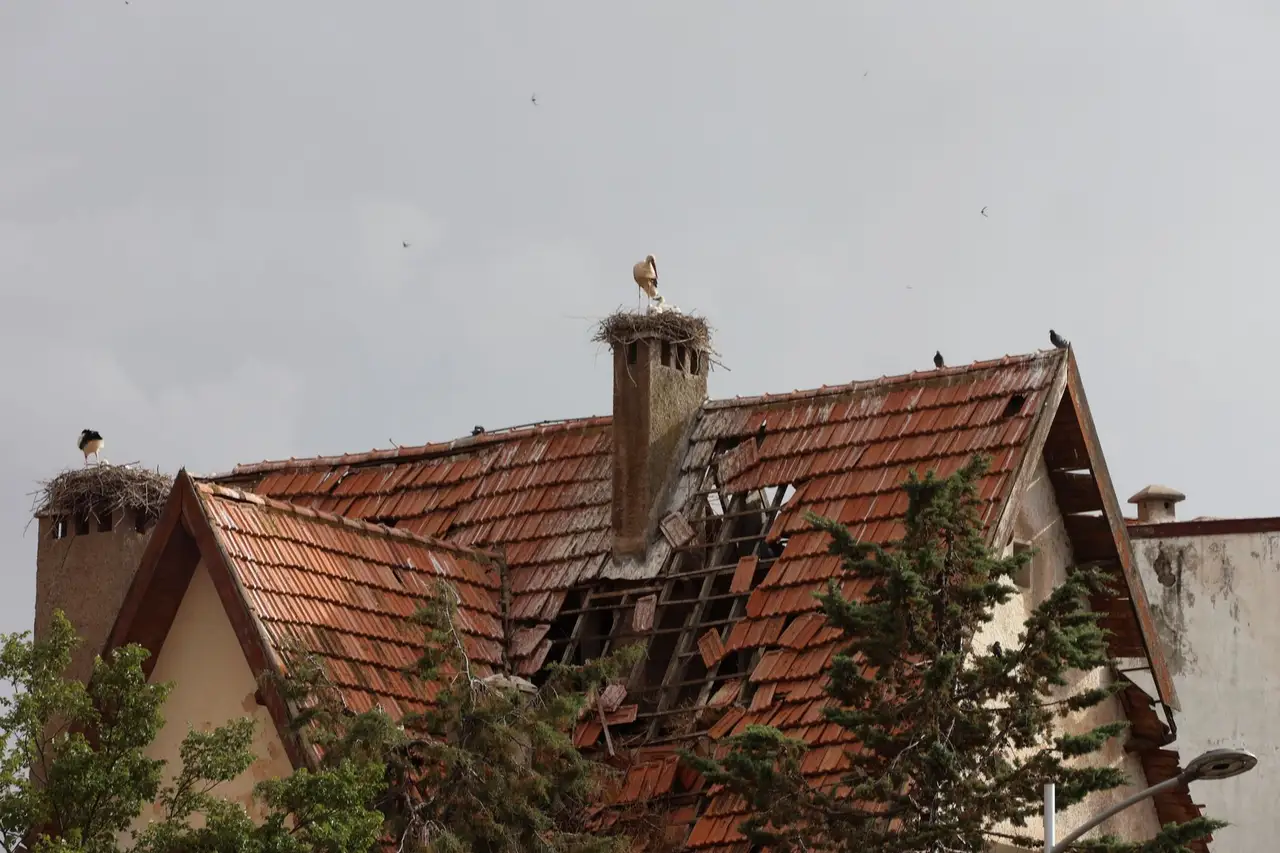
One leader cannot carry a long run in a Houston burst. We add a leader, re-pitch the run toward it, and the overflow stops.
Water dumped at the slab swells Houston’s clay and moves foundations. We fit extensions and splash blocks so the discharge lands 6 to 10 feet out.
Needles pack the outlets first. We fit guards on the worst runs, clear the outlets, and prove the flow with water.
Flat-roof scuppers and interior drains are part of the same water path. We check the scupper, the leader and the discharge as one system, and add capacity where the roof needs it.
Houston rain arrives in bursts, and the downspout is the bottleneck. About 52 inches a year, much of it in short, intense downpours, means a leader sized for average rain fails exactly when it matters — and the water it cannot carry goes over the gutter edge, down the wall, and onto a slab sitting on swelling clay. The fix is sizing to the roof area and the local rainfall, and routing the discharge away from the house.
Pine needles pack the outlets first. Guards on the worst runs and larger leaders keep the system moving through the needle drop.
Oak leaves and heavy canopy load the valleys and outlets. We check the outlet, not just the run, and fit guards where the canopy is heaviest.
Townhome flat roofs drain through scuppers and interior drains into the leaders. A ponding flat roof and an overflowing leader are often the same problem.
Low-slope ranches shed water slowly and the eaves work hard. Leaders here need the discharge routed well clear of the slab.
Extensions and pop-up emitters matter most where the lot is tight. We route the discharge so runoff clears the slab without flooding the beds.
Short, heavy downpours overwhelm undersized leaders. We size capacity to the roof area and the rainfall, so the system keeps up instead of overflowing.
A 1970s ranch had a single small leader for a 60-foot run. Every heavy rain, the far end overflowed and water ran down the wall, staining the brick.
We added a second leader, re-pitched the run toward it, and fitted extensions. The overflow stopped, and the wall stays dry.
Keep it working: Check the outlets each fall. A clogged outlet is what turns a good leader layout into an overflow.
A home in the Heights had downspouts ending a foot from the foundation. The slab beds stayed wet, and the clay soil swelled and shrank with every rain.
We fitted extensions and splash blocks carrying water 8 feet from the house. The beds dry out between storms now.
Keep it working: Keep the extensions in place. A kicked-aside extension is the same as no extension.
A Kingwood home’s outlets clogged with needles every fall, and the gutters overflowed at the corners in the first heavy rain.
We cleared the outlets, fitted guards on the worst runs, and proved the flow with water. The corners stopped overflowing.
Keep it working: Clear the guards after the heavy needle drop. Guards cut the work down — they do not remove it.
Most of the expensive damage we see in Houston started as a small drainage problem. Here are the ones we run into most and how we stop them.
A long run with one small leader overflows in a Houston burst. We size leaders to the roof area and add capacity where the roof needs it.
Downspouts that stop at the foundation dump water where Houston’s clay swells and moves. Extensions and splash blocks carry it 6 to 10 feet away.
Pine needles and oak leaves pack the outlets first. We clear them, fit guards where the canopy calls for it, and prove the flow with water.
Elbows that were only slipped together separate in a storm and dump water down the wall. We crimp, seal and screw every joint.
Downspouts are part of the roof water system, and we treat them that way. The leader, the outlet, the elbow and the discharge are one path — if any link fails, the roof and the slab pay for it. We size the path to the roof area, prove it with water, and show you photos of what we found.

Rated 4.9 out of 5 from 46 Google reviews. The excerpts below are from our Google profile — short excerpts only, with the reviewer’s name, rating and the date Google shows.
“From our first call with Thomas Family Roofing, it was clear they were focused on giving us a quality new roof and making the whole roofing process easy to understand. Miguel explained the scope of the roof replacement, the materials and shingle options…”
Google review · Roof repair for storm & wind damage · Read on Google
“I had storm damage on my roof, and after the first insurance adjuster met with another roofing company, the claim was not approved for roof repair. My niece suggested i call Johnathan, and he came out, met with a different adjuster, and helped get the roof replacement approved.”
Google review · Roof repair for storm & wind damage, gutter installation · Read on Google
“I hired Thomas Family Roofing for a flat roof repair after hearing good things from friends and reading strong reviews. The whole experience was smooth and professional from start to finish. They also cleaned out the roof drains since they were clogged…”
Google review · Roof inspection, flat roof repair · Read on Google
It depends on the roof area feeding each run. A long run with one small leader will overflow in a Houston burst, so we size leaders to the roof area and add capacity where the roof needs it. We measure first and put the leader count in writing.
Six to 10 feet is the rule we work to, with extensions or splash blocks carrying the water there. On tight lots we route to a pop-up emitter so runoff never sits against the slab.
Usually pine needles or oak leaves packing the outlet or the elbow. In Kingwood, needles are the problem all year; in the Heights, oak leaves drop in spring. Guards on the worst runs help, and flushing proves the flow.
Yes — it is one of the most common fixes we do. We cut in a new outlet, hang the leader plumb, and re-pitch the run so water actually reaches it.
Yes. Townhome flat roofs drain through scuppers and interior drains into the leaders, and a blocked scupper ponds water against the parapet. We check the whole path on the same visit.
Call Thomas Family Roofing at (936) 873-7200 and describe what you are seeing — we will tell you honestly whether it needs a visit or can wait for an inspection.
Call (936) 873-7200
A leak at the roof edge is often a drainage problem, not a shingle problem. When we repair a roof, we check whether overflowing gutters or failed fascia caused the damage.
Learn more
If your roof is being replaced, that is the moment to sort the gutters and fascia — the drip edge is fresh and the wood is exposed, so the whole water system can be set up right.
Learn more
Our roof inspection includes the gutter system, downspouts and fascia. We flag loose hangers, sagging runs and clogged outlets before they turn into rot, and you get photos of what we find.
Learn more
Call (936) 873-7200 and tell us what you are seeing — a sagging run, water at the slab, or a gutter that overflows every storm. We will arrange an inspection and give you a written scope before any work starts. Or send a service request through the form and we will call you back.