Focused arrival windows
Useful updates and clear arrival timing.
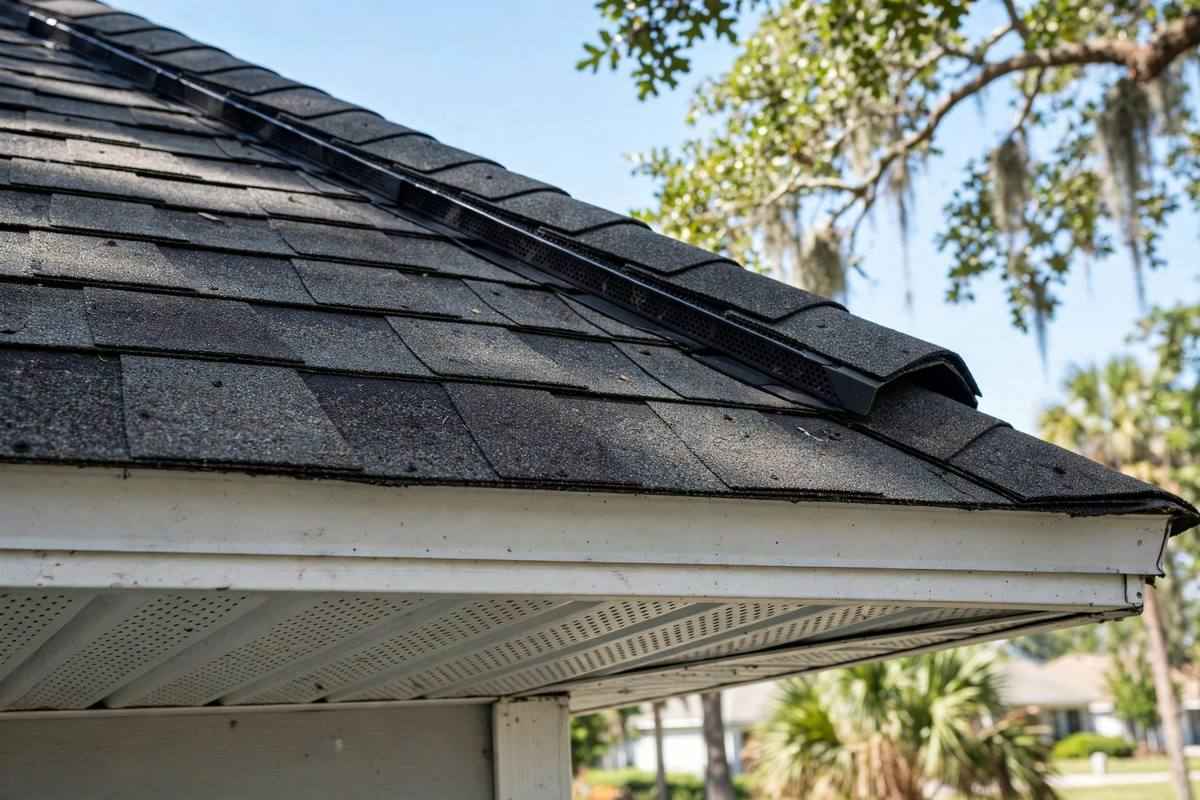
A Houston attic without ventilation is an oven. Attics run 140 to 160 degrees in summer, and the humidity that cannot get out rots the decking from inside, without a stain on the ceiling to warn you. Attic ventilation in Houston means balanced ridge-to-soffit airflow, so the attic can breathe. Start with a roof inspection and a written scope.
Useful updates and clear arrival timing.
Review the approach and price before deciding.
Equipped vehicles and respectful cleanup.
Neighbors serving neighbors with follow-through.
One visit, one attic checked end to end, and the ventilation balanced. Here is what the work covers.
A vent along the ridge, so hot air can leave at the top of the attic.
Intake at the soffits, so cool air can enter at the bottom. Ridge vent without soffit intake does not balance.
Intake and exhaust matched, so air moves through the attic instead of sitting in it.
The attic is checked for moisture, staining, and rot from inside. Houston humidity rots decking without visible staining.
Insulation, paint, and debris that block soffit vents are cleared, so the intake can work.
You get a written scope: what the attic shows, what the ventilation needs, and what it does not need.
Tell us the age of the house and what the attic is doing. We will talk through what a ventilation check covers and the next step.
Attic ventilation in Houston is balanced ridge-to-soffit airflow: intake at the soffits, exhaust at the ridge, matched so air moves through the attic. Without it, the attic runs 140 to 160 degrees, and the humidity that cannot get out rots the decking from inside.
The bungalows are the story. Pre-1980 bungalows in Montrose and EaDo were built with gable and box vents only, well short of balanced ridge-to-soffit ventilation. Houston humidity plus poor ventilation quietly rots decking from inside the attic without visible interior staining. The same is true of legacy structures in EaDo, where original box and gable vents predate the current code and the decking rots from inside.
The code topic is plain language, not section numbers. The adopted 2021 IRC, in force in Houston since January 2024, sets the ventilation ratios, and the check is whether the attic has balanced intake and exhaust. No section number is quoted here, because the section text and the Houston amendments need a live code check before publication.
You call (936) 873-7200 and tell us the age of the house and what the attic is doing. We talk through what a ventilation check covers.
We check the attic for moisture, staining, and rot, and check the ridge and soffit ventilation, photographing what we find.
You get a written scope: what the attic shows, what the ventilation needs, and what it does not need.
Ridge vent is installed or repaired, soffit intake is cleared or added, and blocked vents are opened, so the attic can breathe.
We check the attic again after the work, and the photos go into your file.

Documents the attic, the deck, and the ventilation, so you can see what we saw.
Checks the deck and attic for hidden moisture.
Lights the attic so moisture, staining, and rot can be seen.
Safe access so the attic can be checked, not just the roof.
Works out the intake and exhaust the attic needs, so the ventilation balances.
Cut ridge vent openings and clear blocked soffit vents.
Seals vent joints and penetrations as part of the work.
Measures the attic and the vent areas, so the scope matches the house.
Picks up any fasteners left from earlier work while we are on site.
The findings are written into a scope you can keep, not left as a conversation.
The 1920s bungalow had gable vents only, and the decking was rotting from inside without a stain on the ceiling. We installed ridge vent, cleared the soffit intake, and the attic could breathe.
Original box and gable vents predated the current code, and the decking was rotting from inside. We balanced the ventilation and photographed the attic for the file.
The roof was new, but the attic still ran hot and the shingles were aging from underneath. We checked the ventilation, found the soffit vents blocked with insulation, and cleared them.
Ventilation is a bungalow story in Houston. Montrose and EaDo pre-1980 bungalows were built with gable and box vents only, and Houston humidity rots their decking from inside. Midtown townhomes have the same problem in a different shape, with narrow attic cavities and rooftop terraces above. The fix is the same everywhere: balanced ridge-to-soffit airflow. Call (936) 873-7200 to talk through your attic.
Pre-1980 bungalows were built with gable and box vents only, well short of balanced ridge-to-soffit ventilation.
Legacy structures with original box and gable vents, and decking rotting from inside without visible staining.
Bungalow attics with narrow cavities and old ventilation, beside new townhomes with flat decks.
Townhome attics with narrow cavities and rooftop terraces above, where ventilation is often an afterthought.
without adequate ventilation, Houston attics run that hot in summer.
Houston humidity rots decking from inside the attic without visible staining.
insulation, paint, and debris block soffit intake. A ridge vent without intake does not balance.
A 1920s bungalow with gable vents only, and decking rotting from inside without a stain on the ceiling.
We installed ridge vent, cleared the soffit intake, and the attic could breathe. The deck stopped rotting.
Maintenance: Check the attic, not just the roof. Houston humidity rots decking from inside.
Original box and gable vents, and decking rotting from inside the attic.
We balanced the ventilation and photographed the attic for the file.
Maintenance: After any roof work, check the ventilation. A new roof over a bad attic ages fast.
A new roof and an old attic, with soffit vents blocked with insulation and shingles aging from underneath.
We cleared the soffit vents, and the attic could breathe.
Maintenance: Insulation blocks soffit intake. A ridge vent without intake does not balance.
Attic ventilation problems in Houston trace back to heat, humidity, and old vents. Here is what balanced ventilation fixes.
Without adequate ventilation, Houston attics run that hot in summer, and the heat ages shingles from underneath. Balanced ridge-to-soffit airflow lets the attic breathe.
Houston humidity rots decking from inside the attic without visible staining. We check the attic on every inspection and say what we find.
A hot attic shortens shingle life from the underside. Ventilation is what slows it down.
Pre-1980 bungalows were built with gable and box vents only. Balanced ridge-to-soffit ventilation is the fix.

Our crews check Houston attics every week, from 1920s Montrose bungalows to EaDo legacy homes to Midtown townhomes. Every attic check is photographed, and the written scope is yours to keep. That is what a homeowner can actually check: the photos, the report, and the scope.

“We contacted Thomas Family Roofing for an estimate on repairs for our metal roof in Houston. Luis came out, inspected the roof in person, and explained clearly what needed attention, including a few details about flashing and panel areas that other roofers had missed.”
“They replaced an old cracked skylight on the roof of my two-story home, and I was very pleased with the whole roofing process. From the first call back to the roof inspection, estimate, and final installation, everything was handled on time.”
“I hired Thomas Family Roofing for a flat roof repair after hearing good things from friends and reading strong reviews. The whole experience was smooth and professional from start to finish. They also cleaned out the roof drains since they were clogged.”
Rating 4.9 out of 5 from 46 Google reviews (42 five-star, 4 four-star). A further 41 reviews are visible only as an aggregate on Google. See all reviews on Google.
Attics run 140 to 160 degrees without adequate ventilation. That heat ages shingles from underneath and forces the air conditioning to work harder.
Intake at the soffits and exhaust at the ridge, matched so air moves through the attic. A ridge vent without soffit intake does not balance, and a fan is not a substitute for balanced airflow.
Houston humidity rots decking from inside the attic without visible staining, especially in pre-1980 bungalows built with gable and box vents only. The attic is checked on every inspection.
Ventilation work done as part of a re-roof is covered by the City of Houston Residential Roofing Permit. Standalone ventilation work is scoped in writing, and the permit question is checked per job.
Not seeing your question? Call (936) 873-7200 and talk it through with the local team.
Ask the local teamRidge vent, soffit intake, and balanced airflow, installed as part of a re-roof or on its own.
View serviceA photo and video report of the attic, the deck, and the ventilation, with a written scope.
View serviceAn annual check, debris and valley clearing, sealant touch-ups, and a look after hail season.
View service
When your existing roof is at the end of its life, replacement is the same tear-off and install process, scoped to your home.
View service
Call (936) 873-7200 and tell us what you are seeing. We will talk through what is happening, what an inspection covers, and the next step. Or send a service request with the form and we will call you back.