Focused arrival windows
Useful updates and clear arrival timing.
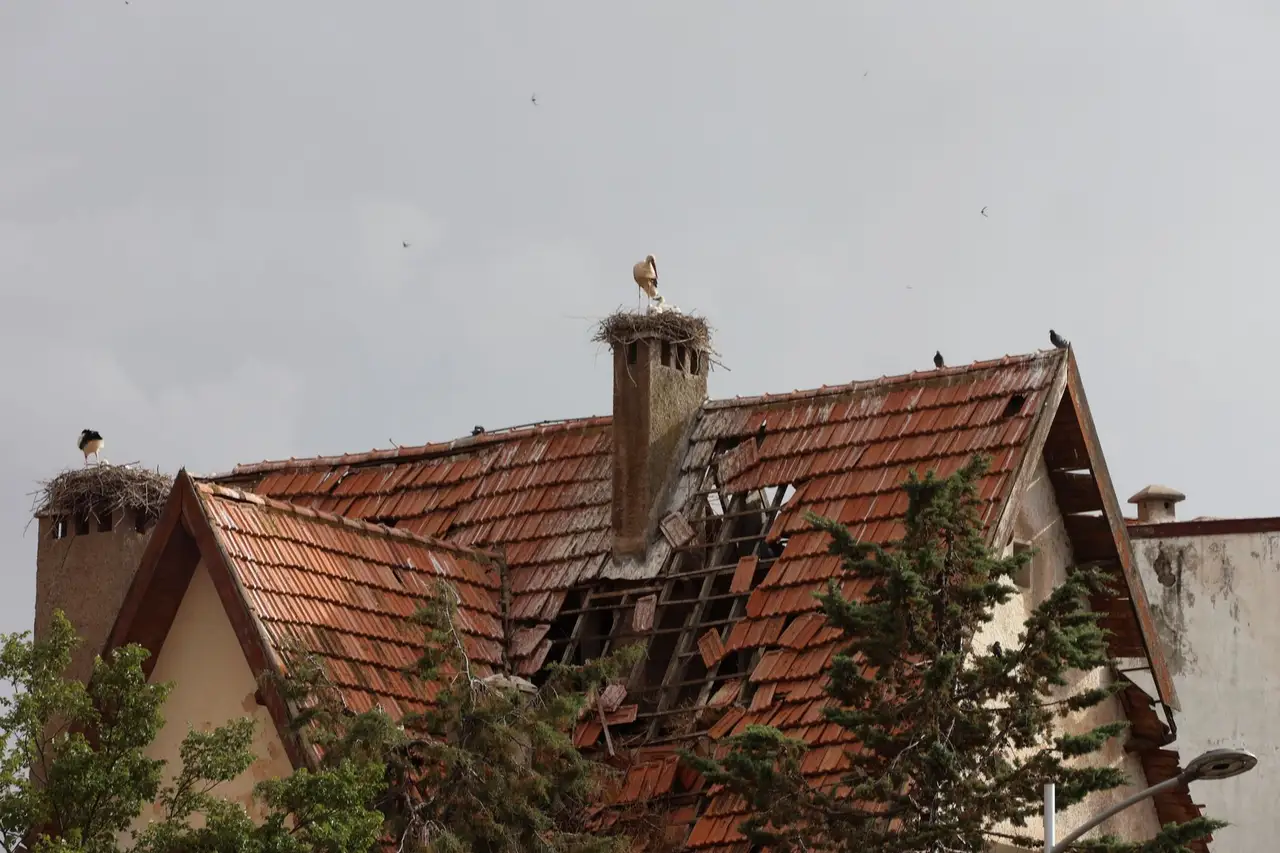
The Medical Center is Super Neighborhood 33 of Houston, south of Hermann Park between Main Street and Brays Bayou. It is largely institutional — the Texas Medical Center — plus high-rise residential and condo buildings and a small single-family edge. This is a commercial and institutional flat-roof page, not a residential shingle page: membranes, parapets, drains and condo-association scope.
Useful updates and clear arrival timing.
Review the approach and price before deciding.
Equipped vehicles and respectful cleanup.
Neighbors serving neighbors with follow-through.
Roofing in the Medical Center is flat work. Hospital and institutional buildings, high-rise residential towers and condo buildings all carry commercial flat membranes — TPO, PVC, modified bitumen or built-up — with parapets, interior drains and rooftop equipment. A leaking membrane here can affect several floors below it, and the roof usually belongs to the institution or the condo association, not the person in the unit underneath it.
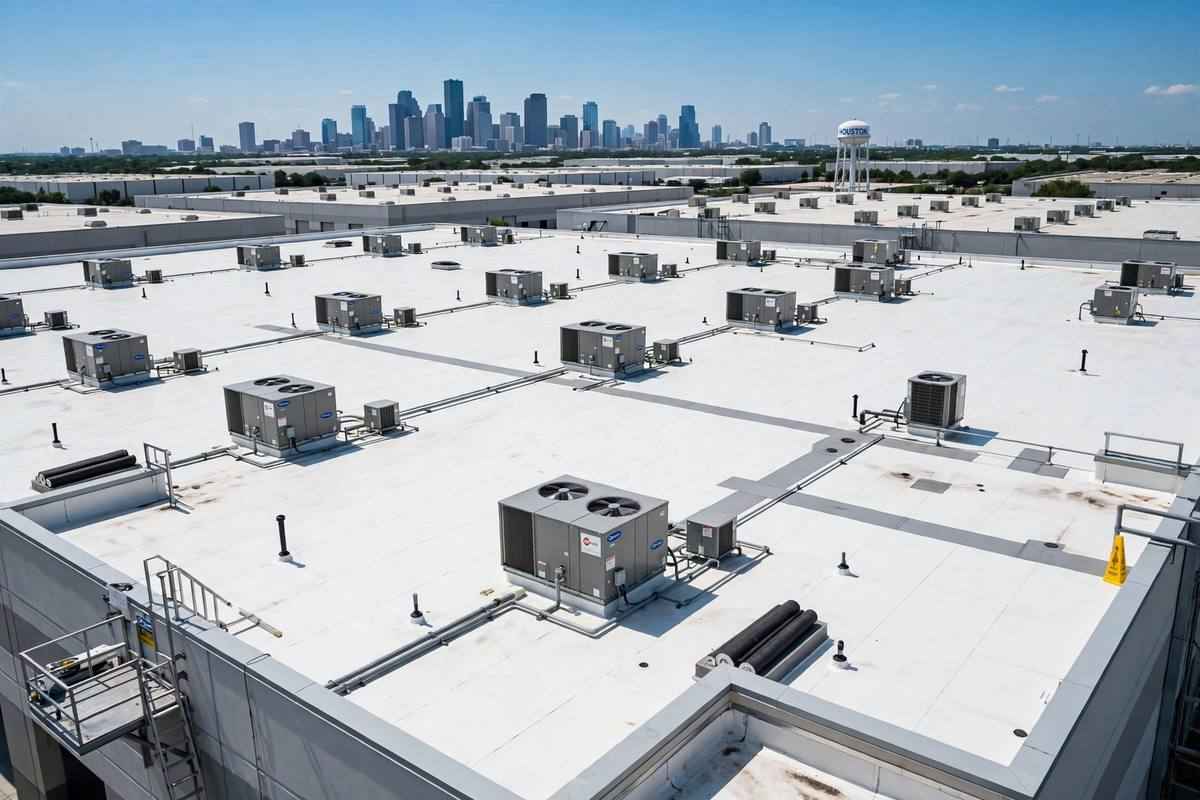
The Medical Center needs commercial flat roofing, not a shingle page. We offer the full range of flat-roof services for institutional, high-rise and condo buildings, scoped per building and per system.
New roof installation in Medical Center starts with the roof system that fits the house, not a catalogue pick. We tear off, check the deck, and install underlayment, flashing and ventilation as one job, then walk the roof with you.
View service →02When repairs stop making sense, a full replacement in Medical Center means a tear-off to the deck, new underlayment and flashing, and a written scope before work starts. Houston heat shortens shingle life to roughly 18–25 years, so age matters as much as visible damage.
View service →03Missing shingles, a lifted ridge cap, a cracked vent boot — most Medical Center repairs are small jobs if they are caught early. We find the entry point, fix the flashing or shingle, and check the deck underneath before we call it done.
View service →04A roof inspection in Medical Center is a written record: photos of the roof, the flashing, the vents and the attic side of the deck, with what needs work now and what can wait. Bring it to a sale, a claim or a renovation plan.
View service →05Residential roofing in Medical Center covers pitched shingle roofs and the flat or low-slope sections that sit on top of additions, garages and townhomes. One house can have two roof systems of different ages, and each gets its own scope.
View service →06Commercial and multi-family flat roofs in Medical Center are a different trade from a house roof: membranes, parapets, interior drains and scuppers. We scope membrane, insulation, deck and drains as separate line items so the owner knows what is being fixed.
View service →07Architectural asphalt shingle is the dominant pitched roof in Medical Center. In Houston’s heat, humidity and UV, shingles age faster than the national figures on the box, so we talk about the roof you have — its age, slope and shade — before recommending a replacement.
View service →08Standing-seam metal suits Medical Center homes where the roof needs to shed wind-driven rain and stand up to hail and falling limbs. It costs more up front than shingle, and it needs the right fastening and flashing detail — get that wrong and the premium is wasted.
View service →09Clay and concrete tile appear on some Medical Center homes, usually on newer custom builds. Tile often outlives its underlayment by decades, so a tile job is frequently an underlayment and flashing job, quoted per roof after the tile is lifted and the deck is seen.
View service →Executing a roofing job in the Medical Center means working around operating hospitals, clinics and occupied towers. Work is staged so buildings stay in use, drains and parapets get the same attention as the membrane, and the scope letter maps each line item to the right owner.
In hospitals the facilities team owns the roof; in condo towers the association usually owns the envelope. We provide a written scope letter mapping membrane, insulation, deck and drain collars to the correct ownership category before work starts.
TPO, PVC, modified bitumen and built-up membranes with parapets, interior drains and scuppers. Ponding against parapets dissolves asphalt seams and leaks into top-floor rooms — we check slope, drains and scupper sizing on every inspection.
Hospitals and clinics do not close for a roof. We phase the work, protect occupied floors below, and schedule noisy work around the building’s hours.
Texas has no state roofing licence — the Texas Department of Licensing and Regulation does not license roofers, and the bill that would have created one (HB 3344, 2025) died in committee. Houston has only a voluntary contractor registration. We never claim a licence we do not hold.
The Medical Center is inside the City of Houston. Commercial re-roofs follow the City of Houston’s commercial roofing process, and institutional buildings add their own facilities-management approval chain. Residential re-roofs in the small single-family edge need a City of Houston Residential Roofing Permit.
The Medical Center’s institutional and high-rise flat roofs create specific problems. Here are the most common we see.
Standing water against perimeter walls dissolves asphalt seams and leaks into top-floor rooms. We re-slope with tapered insulation and verify scupper and drain sizing rather than patching the seam.
A converted or renovated tower often retains an older commercial membrane under a new residential use. The membrane age and the conversion age are different numbers — check both before scoping a replacement.
HVAC units, vents and skylight curbs are the leak points on a flat roof. Flashing around equipment fails first, and wind-driven rain finds it. We re-flash equipment curbs as part of every membrane job.
When a membrane leaks into a unit, the question is whose roof it is. Disputes over that boundary can stall remediation for months. A written scope letter, drawn from the declaration, prevents most of them.
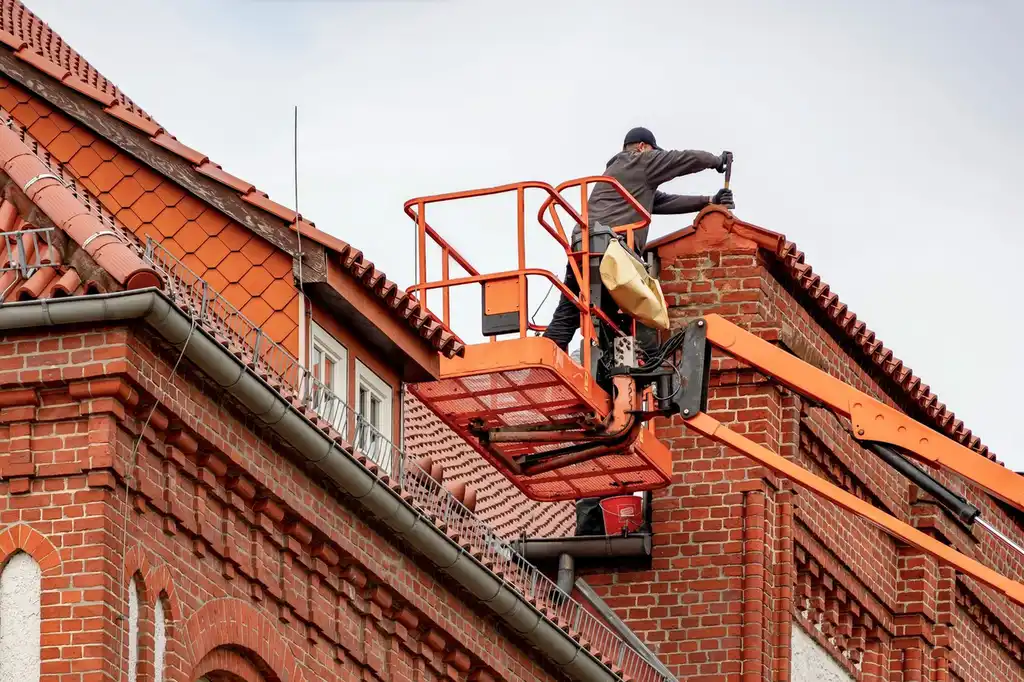
The Medical Center is defined by its institutions and the park. We use these to orient crews.
The largest medical complex in the world, and the reason this area’s roofs are institutional flat roofs rather than shingles.
The northern edge of the Super Neighborhood. The park’s trees and the Brays Bayou edge set the area’s flood question.
The bayou along the southern edge of the area. Flood risk follows the bayou — check the address.
The eastern boundary of the Super Neighborhood and the main route for crews coming from central Houston.
We work throughout the Medical Center area, across its institutional buildings, high-rise towers and condo buildings. Here are a few areas where we frequently work.
Hospital and institutional buildings with large flat membranes, rooftop equipment and facilities-management approval chains.
Residential towers where the condo association usually owns the envelope — membrane, flashing and deck.
Clinics, research and office buildings with commercial flat roofs, staged so the building stays in use.
The townhome and condo flat roofs on the northern edge, where the Medical Center meets the Museum District.
We do not publish case studies or project photos as proof of work in Medical Center — the work is the process below, the written scope, and the reviews from real customers further down this page.
We inspect the roof, the flashing, the vents and the attic side of the deck, and photograph what we find. You get a written scope that separates what needs work now from what can wait.
We confirm the permit authority for your address — City of Houston commercial process — and any association review that applies, before materials are ordered. Starting work before the right approval lands is the most expensive mistake in Houston roofing.
Tear-off to the deck, new underlayment and flashing, then a final walkthrough with photos of the finished roof. If water was coming in, we talk through immediate steps, including tarping, on the first call.

“From our first call with Thomas Family Roofing, it was clear they were focused on giving us a quality new roof and making the whole roofing process easy to understand. Miguel explained the scope of the roof replacement, the materials and shingle options...”
“We contacted Thomas Family Roofing for an estimate on repairs for our metal roof in Houston. Luis came out, inspected the roof in person, and explained clearly what needed attention, including a few details about flashing and panel areas that other roofers had missed.”
“I hired Thomas Family Roofing for a flat roof repair after hearing good things from friends and reading strong reviews. The whole experience was smooth and professional from start to finish. They also cleaned out the roof drains since they were clogged...”
Roofing needs change with the seasons in Medical Center. Hurricane season runs 1 June to 30 November, peaking in the second week of September; hail season is spring, peaking in May. Here is what to expect and how to prepare.
Spring brings heavy rain, thunderstorms and hail season, which peaks in May. Leaks that developed over winter show up now, and shaded slopes start growing algae again.
Summer heat pushes Houston rooftops past 160°F on flat sections, and afternoon storms bring wind and hail. Attic ventilation matters most in these months.
Falling leaves and pine needles pack valleys and gutters, and cooler weather is the best window for planned roof work before winter rains.
Houston winters are mild, but cold snaps and winter storms still stress older roofs. Winter is a good time for an inspection and for planned replacements.
Medical Center is one place in a larger region. The places below are separate cities or communities, each with its own permit authority and flood story — follow the link for that place’s own page.
North of Hermann Park — 1920s–40s bungalows and museum-district townhomes with flat decks on the Brays Bayou edge.
Local coverage and details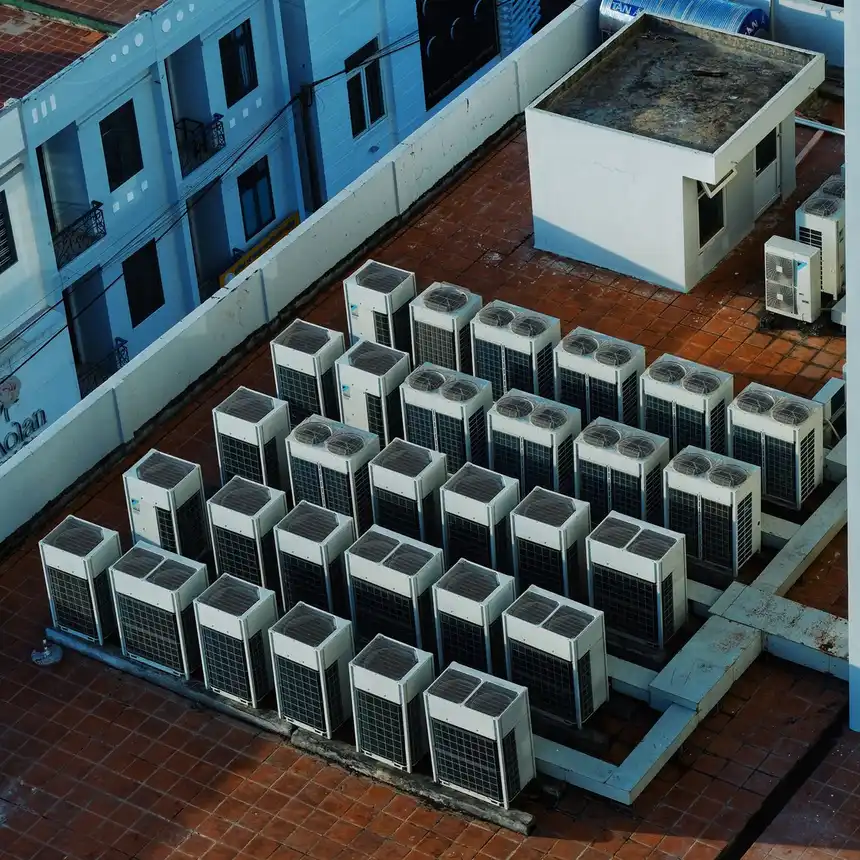
1993–2008 townhomes with flat membranes expiring all at once, north of the Medical Center.
Local coverage and details
High-rise flat membranes and parapet ponding in the city centre.
Local coverage and detailsBefore you hire a roofer, ask these questions to ensure you are getting a straight answer. A good contractor will answer them clearly and without hesitation.
No. Texas has no state roofing licence — the Texas Department of Licensing and Regulation does not license roofers, and the bill that would have created one (HB 3344, 2025) died in committee. Houston has only a voluntary contractor registration. Ask any roofer what they actually hold, and do not accept a licence claim at face value.
The Medical Center is inside the City of Houston. Commercial re-roofs follow the City of Houston’s commercial roofing process, and institutional buildings add their own facilities-management approval chain. Residential re-roofs in the small single-family edge need a City of Houston Residential Roofing Permit.
A written scope should list tear-off, decking, underlayment, flashing, ventilation and disposal as separate lines, and say what happens if the deck is rotten once the old roof is off. A single lump-sum number with no lines is not a scope.
We can document damage, photograph it, and meet your adjuster. We are not a public adjuster, we do not negotiate claims, and we cannot guarantee approval. Texas law also bars a contractor from waiving or absorbing your deductible — anyone who offers to is breaking the law.
Condo towers in the Medical Center are governed by their recorded condo declarations and association boards, not by single-family associations. We map each scope line to the declaration’s ownership categories before work starts.
TDLR does not license roofers. Any site that claims a Texas roofing licence is wrong.
Commercial re-roofs in the Medical Center follow the City of Houston’s commercial roofing process. Institutional approval chains run alongside it.
The Medical Center is inland Harris County, outside the TWIA windstorm catastrophe area. Wind and hail normally sit on the standard policy.
No flood zone is published here for a whole area. Check your address at msc.fema.gov or harriscountyfemt.org before planning work.
Texas Insurance Code Ch. 707 bars a contractor from waiving, rebating or absorbing a homeowner’s deductible.
Our Google rating is 4.9 from 46 reviews (42 five-star, 4 four-star). The reviews shown on this page are real Google reviews, quoted in part.
Commercial pricing is the least settled figure we publish, because scope changes everything. For market context only, Texas commercial sources put all-in tear-off and replacement at roughly $14–$20 per square foot of roof surface, and residential low-slope TPO at $5–$8. These are market figures, not our prices — call (936) 873-7200 for a written scope and price for your building.
Only on the small single-family edge. The Medical Center is largely institutional and high-rise, and its roofs are commercial flat membranes. A shingle page for the Medical Center would be wrong on its face — this page is a commercial and institutional flat-roof page.
Usually the condo association, not the unit owner. Recorded condo declarations typically vest ownership of the building envelope — membrane, flashing and deck — in the association. Each tower’s declaration draws the line differently, so pull your declaration before calling a roofer.
Yes — commercial re-roofs follow the City of Houston’s commercial roofing process, and institutional buildings add a facilities-management approval chain. Residential re-roofs on the single-family edge need a City of Houston Residential Roofing Permit.
Because flat-roof leaks travel. Ponding against a parapet, a failed drain collar or a flashing joint at an equipment curb can let water in far from where it shows inside. We inspect the membrane, the drains, the scuppers and the parapet as one system, and camera-inspect the drains.
Not seeing your question? Our local team can help you understand urgency, scheduling and what to expect.
Ask the local team
Call (936) 873-7200 — phone is the fastest way to reach us. Tell us what you are seeing: the address, the roof’s age if you know it, and photos of any leak or damage. If water is coming in, say so on the call and we will talk through immediate steps, including tarping, before an inspector visits. You can also send a service request with the form.